

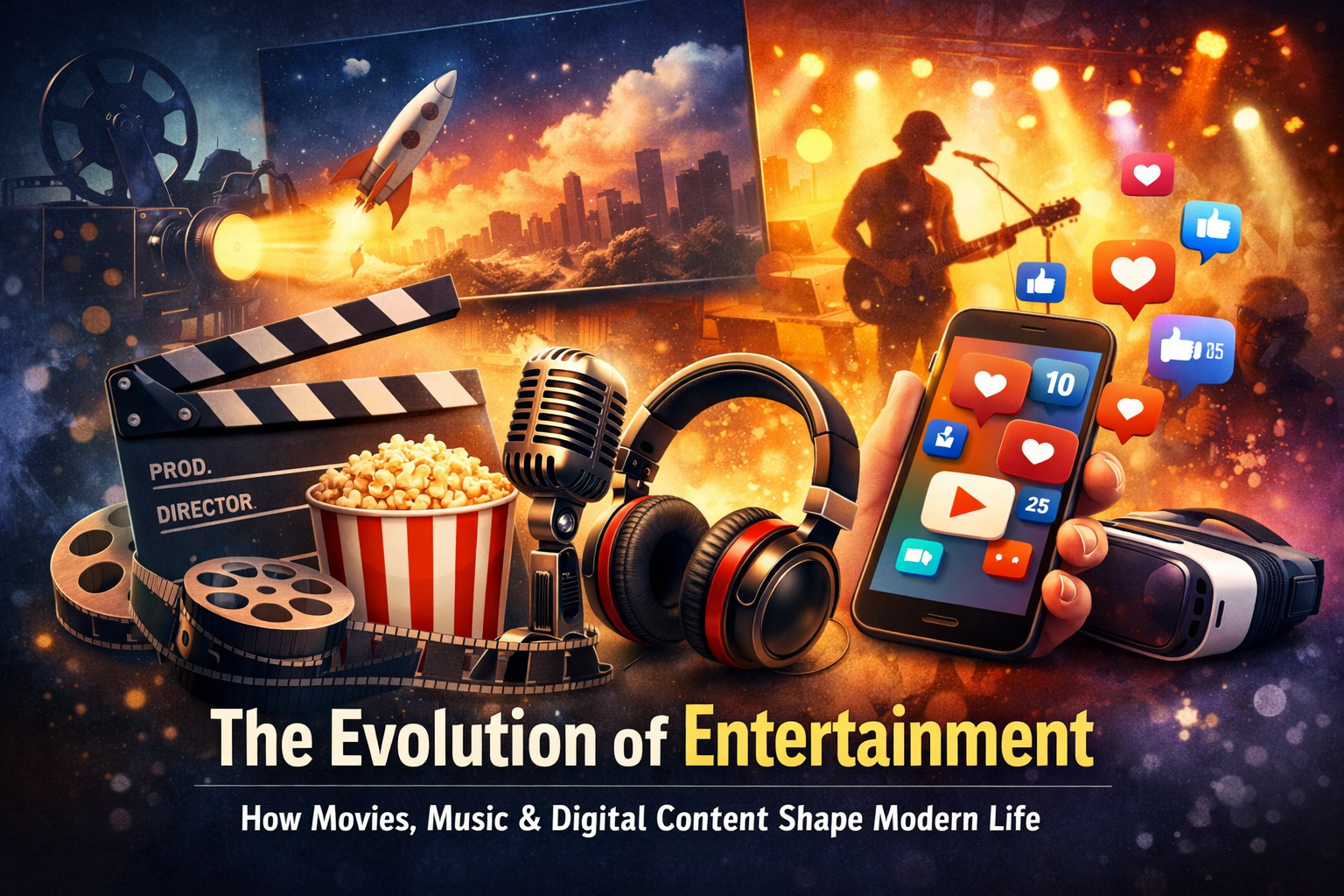
Entertainment has always been an essential part of human life. From ancient storytelling around fires to modern binge-watching sessions on streaming platforms, the way people consume entertainment has changed dramatically. Today, entertainment is no longer limited to theaters, television, or radios—it lives in our smartphones, social media feeds, and digital platforms. This evolution reflects not just technological growth but also changes in lifestyle, culture, and human connection.
The Roots of Traditional Entertainment
In earlier times, entertainment was mostly community-based. Folk music, live drama, street performances, and storytelling were common forms of leisure. People gathered together to watch performances, making entertainment a shared social experience. With the invention of cinema in the late 19th century, entertainment entered a new phase. Movies became a powerful medium to tell stories, express emotions, and influence society.
Television later brought entertainment directly into homes. Families planned their schedules around TV shows, news bulletins, and weekend movies. Music, too, evolved through vinyl records, cassette tapes, and CDs, becoming more accessible to the masses. These traditional forms laid the foundation for the entertainment industry we know today.
ADVERTISEMENT
The Rise of Digital Entertainment
The internet revolutionized entertainment in ways never imagined before. Streaming platforms replaced physical media, allowing people to watch movies and series anytime, anywhere. Platforms like OTT services changed viewing habits—episodes are no longer waited for weekly; entire seasons are consumed in one sitting.
Music streaming apps transformed how listeners discover and enjoy songs. Personalized playlists, algorithms, and instant access to millions of tracks made music more interactive and personal. Digital entertainment removed geographical barriers, enabling global content to reach local audiences.
Social Media as a New Entertainment Hub
Social media platforms have become major entertainment sources. Short videos, memes, reels, and live streams now compete with traditional TV and cinema. Content creators, influencers, and independent artists have gained massive followings without relying on big production houses.
This shift democratized entertainment. Anyone with creativity and consistency can become an entertainer. Audiences no longer just consume content—they engage, comment, share, and even influence trends. Entertainment has become a two-way interaction rather than a one-sided broadcast.
ALSO READ – Netflix Late-Night Emails: What They Mean and Why You’re Getting Them
Changing Audience Preferences
Modern audiences seek relatable, fast, and engaging content. Attention spans have shortened, increasing demand for quick entertainment like short videos and web series episodes. At the same time, there is also appreciation for high-quality storytelling, meaningful cinema, and authentic performances.
ADVERTISEMENT
Viewers now prefer content that reflects real emotions, social issues, and diverse perspectives. Regional and independent content is gaining popularity alongside mainstream productions. This shows that entertainment is no longer about glamour alone—it’s about connection and representation.
Impact of Entertainment on Society
Entertainment influences culture, fashion, language, and even opinions. Movies and series shape how people perceive relationships, success, and social norms. Music becomes a voice for emotions, protest, and celebration. Digital creators often raise awareness about mental health, lifestyle choices, and social responsibility.
However, entertainment also comes with challenges. Overconsumption, screen addiction, and misinformation are growing concerns. This makes responsible content creation and mindful consumption more important than ever.
Technology and the Future of Entertainment
Technology continues to redefine entertainment. Virtual reality (VR), augmented reality (AR), and artificial intelligence (AI) are creating immersive experiences. Interactive movies, virtual concerts, and AI-generated music are slowly becoming part of mainstream entertainment.
ADVERTISEMENT
The future points toward personalized and interactive content where audiences choose their experience. Live digital events, metaverse concerts, and advanced gaming platforms hint at an entertainment world that blends reality with imagination.
Conclusion
Entertainment has evolved from simple community gatherings to complex digital ecosystems. While formats and platforms continue to change, the purpose of entertainment remains the same—to connect, inspire, and provide joy. In the modern world, entertainment is not just a source of relaxation; it is a reflection of society itself.
As technology grows and creativity expands, entertainment will keep adapting to human needs. The key lies in balancing innovation with meaningful storytelling, ensuring that entertainment continues to enrich lives rather than merely distract them.
Disclaimer
All news on Hindi Khabra are computer generated and provided by third party sources, so read and verify carefully. Hindi Khabra will not be responsible for any issues.