

Table of Contents
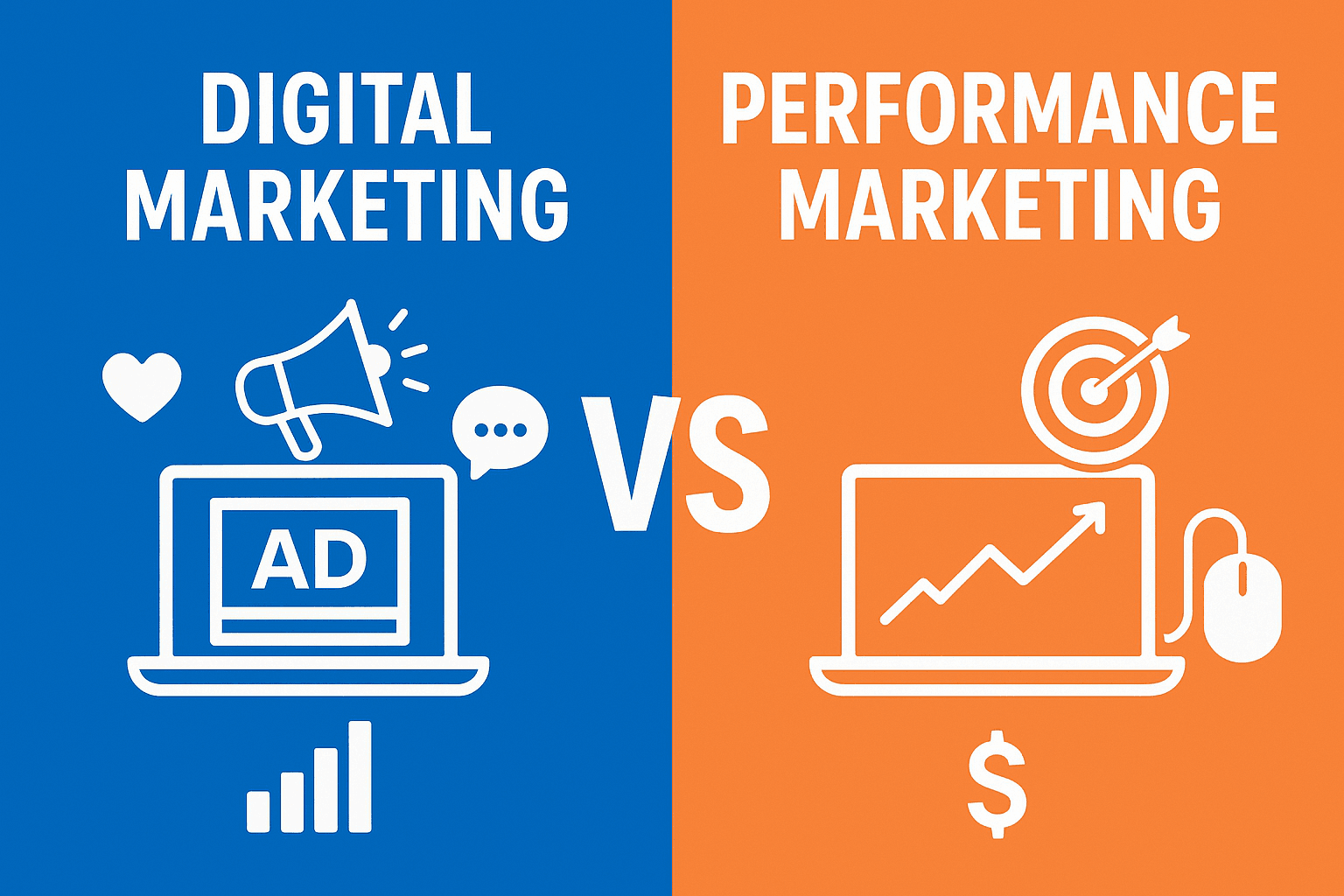
In the modern marketing landscape, businesses are constantly searching for strategies that not only boost visibility but also deliver measurable returns. This is why the debate surrounding Digital Marketing vs Performance Marketing remains one of the most important questions for growing brands. While digital marketing builds awareness and long-term credibility, performance marketing focuses on generating quick, trackable results. To make the right choice, businesses must understand how both methods work and how they can be combined for maximum impact. Here are five powerful insights that explain how awareness eventually leads to ROI.
What Is Digital Marketing?
Digital marketing refers to all online promotional activities that help a brand build visibility, engagement, and trust across digital platforms. This includes content marketing, SEO, social media marketing, email campaigns, branding videos, and website optimization. The primary goal is long-term brand awareness and customer relationships.
Digital marketing is often seen as the foundation of modern branding because it helps businesses stay relevant, communicate their value, and attract audiences organically. Techniques such as search engine optimization, blogging, and social media engagement contribute to consistent growth over time without relying solely on paid campaigns.
What Is Performance Marketing?
Performance marketing focuses strictly on results. Here, businesses pay only for specific actions such as clicks, installs, leads, or conversions. This approach is highly measurable and ideal for companies prioritizing fast ROI. Platforms like Google Ads, Meta Ads, affiliate marketing, and lead generation campaigns fall under this category.
Businesses choose performance marketing when they want targeted outcomes, rapid customer acquisition, and a clear understanding of the return on every rupee spent. It is an excellent strategy for short-term growth or for scaling campaigns based on real-time performance data.
Powerful Insights: Insight 1: The Foundation of Awareness Begins with Digital Marketing
The first step to building a brand online is visibility. Digital marketing uses tools like SEO, content marketing, blogging, social media engagement, and email nurturing to create organic awareness. These methods help businesses establish authority, connect with audiences authentically, and improve search engine rankings.
This long-term approach ensures that customers repeatedly discover the brand, trust its message, and return for more information. That’s why, in the comparison of Digital Marketing vs Performance Marketing, digital marketing is often considered the backbone of any strategy aiming for sustainable growth.
Over time, strong digital presence reduces paid ad dependency, lowers customer acquisition costs, and boosts credibility. This makes digital marketing essential for businesses wanting to build lasting relationships and appear consistently in search results.
Insight 2: Performance Marketing Delivers Fast and Measurable ROI
While digital marketing helps build awareness, performance marketing focuses entirely on measurable outcomes. This includes clicks, leads, conversions, downloads, or purchases. The pay-for-performance model ensures that businesses only spend money when specific actions are achieved.
Platforms such as Google Ads, Meta Ads, affiliate networks, and display campaigns allow brands to immediately target the right audience and track each rupee spent. This makes performance marketing perfect for businesses that want quick results, high-intent traffic, and predictable ROI.
In the debate of Digital Marketing vs Performance Marketing, this results-driven approach stands out for its ability to scale campaigns quickly based on performance data.
Insight 3: Awareness Drives Better Conversions and Lowers Ad Costs
One of the biggest advantages of digital marketing is its ability to make performance campaigns more successful. When customers are already familiar with your brand through blogs, videos, SEO content, and social media, they are more likely to click on ads and convert.
For example:
- A user who reads your blog today may click your ad tomorrow.
- A viewer who watches your social video may convert in the next campaign.
- A customer who trusts your brand’s content will respond better to a performance-driven offer.
This is why businesses should not view Digital Marketing vs Performance Marketing as an either/or choice. Instead, combining both allows brands to reduce cost-per-click (CPC), improve lead quality, and increase conversion rates.
Insight 4: Data From Both Strategies Strengthens Decision-Making
Data is the heart of modern marketing. Digital marketing provides insights on audience behavior, engagement patterns, user intent, and keyword performance. Performance marketing delivers real-time data on ROI, conversion rates, click-through rates, and customer acquisition costs.
When these insights work together, businesses gain a complete understanding of their funnel—from awareness to final purchase.
For example:
- SEO data reveals what customers search for.
- Performance ads test which messaging works best.
- Social media insights show what topics attract attention.
- Retargeting performance indicates which audiences are ready to convert.
Using unified data makes the combination of Digital Marketing vs Performance Marketing significantly more effective, helping businesses make smart, data-driven decisions.
Insight 5: Combining Both Strategies Delivers Maximum ROI
The most powerful insight is that brand awareness and ROI are not separate goals—they support each other. Digital marketing brings long-term visibility and customer trust, while performance marketing converts that trust into sales quickly.
A combined strategy looks like this:
- Build awareness with SEO and content marketing
- Engage audiences through social media branding
- Run performance ads to generate leads or conversions
- Use retargeting to convert website visitors into buyers
- Optimize campaigns using long-term and real-time data
This holistic approach ensures that businesses stay visible, credible, and profitable at every stage of the customer journey.
Also Read: 9 Common Mistakes in Digital Marketing: Pitfalls You Must Avoid
EEAT Guidelines Applied
Expertise
The insights provided reflect real industry practices based on proven digital and performance marketing methods.
Experience
The article references practical scenarios such as SEO-driven awareness, ad optimization, and multi-channel engagement.
Authority
The explanation of Digital Marketing vs Performance Marketing aligns with globally accepted marketing strategies used by leading brands.
Trust
The content emphasizes transparent tracking, ethical marketing, and long-term customer value.
Conclusion
Understanding the advantages of Digital Marketing vs Performance Marketing helps businesses design a strategy that delivers both awareness and ROI. Digital marketing strengthens credibility and organic reach, while performance marketing generates measurable outcomes and faster growth. When combined, they create a powerful, full-funnel marketing system that helps brands build trust, attract the right audiences, and achieve consistent revenue.
FAQs
1. Which is better for brand awareness?
Digital marketing is best for building long-term visibility and trust.
2. Which strategy gives faster results?
Performance marketing delivers results quickly because it focuses on actions like leads and sales.
3. Is it possible to use both together?
Yes, and it is the most effective approach for maximum ROI.
4. Does performance marketing require a big budget?
Not always—budgets can be scaled based on real-time performance.
5. Which is better for new businesses?
A mix of SEO, content, and performance campaigns helps new businesses grow quickly and sustainably.
Disclaimer
All news on Hindi Khabra are computer generated and provided by third party sources, so read and verify carefully. Hindi Khabra will not be responsible for any issues.